Pausing the HE dispute is an FE issue

Co-written with Sean Vernell, national FE negotiator

The decision to ‘pause’ the action in Higher Education is not a matter simply for those colleagues in HE. It is a concern for those who work in FE too. There are two clear issues with the pausing of the action. First there is a question of tactics. Employers always try and get the union to pause whilst negotiations take place. Very rarely they do so because there is a real offer on the table that could reach a settlement. The employer raises the question of pausing the action because they are under pressure and are looking for ways to relieve that pressure.
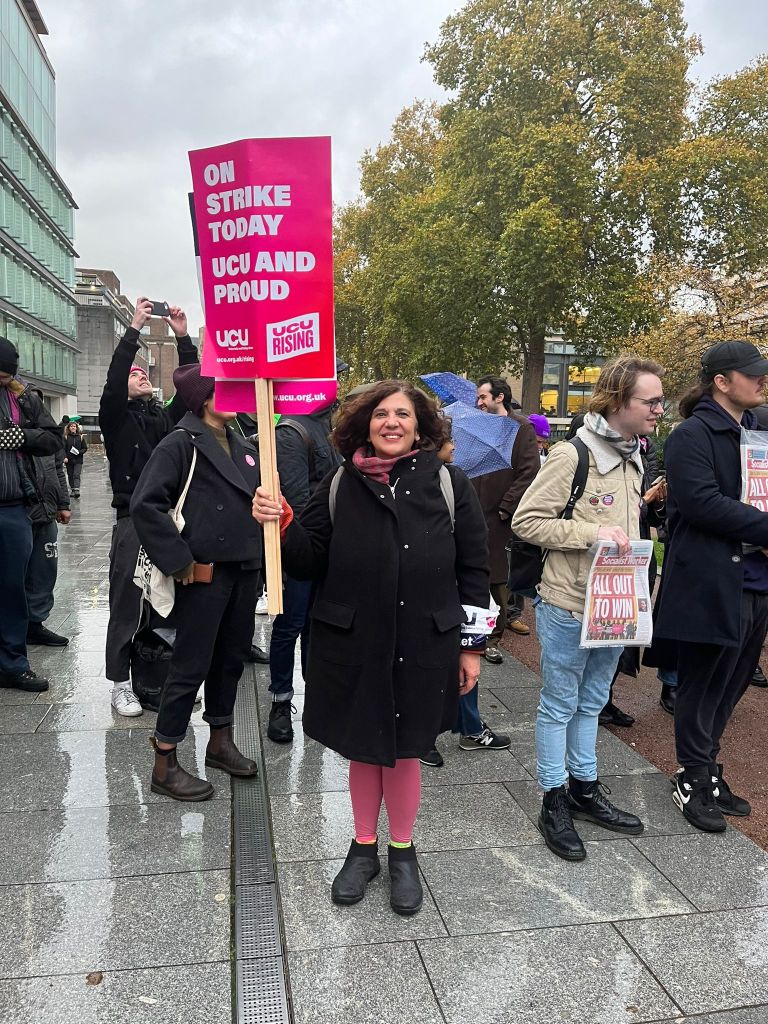
This is why it is tactically naïve and irresponsible to call off action that has put our negotiators in a strong position to win a significant deal, especially when the action is gaining momentum. Pausing action invites the employers to regroup so that they can go back on the offensive. This is precisely what happened when the RMT and CWU paused strikes for talks. The employers took this as a signal to impose more redundancies, smash existing agreements and make no movement over pay.

Those who have been involved in strike action over the last few years in FE will be all too familiar with ‘pausing disputes’ for talks, usually advised by UCU HQ or regional offices. Rarely has pausing disputes, when they have just started building momentum, gained any meaningful deals.

The second issue with pausing the strike in HE that is of concern for those  in FE is the blatant disregard for UCU’s democratic structures. It is extraordinary that the General Secretary agreed to call off the action without consulting the HEC first or better still to consult members. This ‘we know best’ approach to leadership is one that will only lead to frustration and anger amongst those who have struck, picketed, and marched to pursue their claims. If UCU is to be a ‘member led union’ not just in name but in practice, then it must always allow those who are making the sacrifice to determine their own futures.

In Further Education, as we begin our campaign to win a nationally aggregated ballot so that we can strike over, pay, workload and a national bargaining framework,  we must be alert to what is taking place in HE.

Unfortunately, as is mentioned above,  what took place on Friday is not something peculiar to UCU – it is something that is all too common within other unions.

Trade Union Leaders believe that their members do not have the determination and stamina to launch a fight that can win. This stems from their acceptance of the parameters of what is possible according to what the employers and government tell us is possible.

There has never been a better time to fight. The government is in crisis. The employers are deeply divided over Europe. They have no strategy on how to resolve the cost-of-living crisis accept to go into attack mode. But our side has shown within UCU, and across the trade union movement as a whole, that working people have the will, the organisation and determination to resist these attacks on a scale that we have not seen in a generation.

Our leaders need to match up to their sacrifice and commitment and not take it for granted.

Defend Further Education!

In its most recent meeting a couple of weeks ago, the FEC took an important decision to build for a nationally aggregated ballot. This decision will provide a clear strategy to fight for FE members pay and better conditions. The FEC called for members to be balloted to take strike action for an above inflation pay rise + 2%, binding national structures and a national workload agreement. There will be a consultative ballot first after which   a FESC will be held to debate the next steps. This is a very welcome and necessary step forward in fighting for a properly funded FE sector, with pay that values the work of FE members. #RespectFE!

FE colleagues have gained some important local victories, through individual branches fighting back and, over the past year, through the nationally coordinated Respect FE campaign. The reps and branch activists must be commended as they have worked tirelessly to get these wins, but now is the time to move to national action.

Firstly, as a union – we must provide strength in unity to all of our members. By building a nationally aggregated ballot we can provide support to branches that have struggled to get action locally. And those branches that haven’t won gains need the support of the union to keep fighting so they don’t feel like they are fighting alone. Secondly, there is a limit to which local branches can win by themselves. Out of the 33 branches that have been in dispute over pay, 13 are still unresolved. Poorer colleges will claim there is no money as they are severely underfunded. Even in wealthier colleges where senior management are on sky high salaries which could be cut to ensure teachers gain fairer pay – there is a limit without increased funding.

National action is necessary so the union can take aim at the employers as a whole and the government to demand increased funding to secure over inflation pay rises. FE colleges have recently been reclassified as public sector bodies; therefore, they should gain parity with teachers and we must demand that they have proper national pay bargaining that ensures more money for the sector.

It is right that this action is taken now. The situation in FE is dire, the sector has lost 25,000 jobs and wages have been cut by 30% over the last decade due to inflation and stagnating pay. Our FE members need the full weight of the union behind them in order to save this vital sector in our society. NEU colleagues, alongside tens of thousands of other workers, are striking for better pay, people can see that teachers need to be valued more. 

FE worked miracles in the pandemic to support young people to continue their learning and provide them with vital emotional and social support. But young people are still scarred physically and mentally, and need support. Adult students need places to go to refresh their skills and to enrol on courses that expand their education. Society needs colleges that can provide these opportunities and second chances. It shouldn’t be overlooked and woefully underfunded, with teachers left exhausted and unable to pay their bills.

At a time when we are seeing the largest fightback by workers to improve their pay for a generation, the FEC decision to join the national fight for better pay and funding is the right one. This is a strategy that can win.

Defend and restore democratic rights (or the creation of fictitious problems)

I’m sure I am not the only UCU member worried about the steady erosion of democratic rights in the UK.

Voter ID is being introduced for elections in the UK.  This will disenfranchise some voters, including some of the most disadvantaged ones.  In the USA, Republican administrations try to keep potential Democratic voters off the electoral registers through such measures.

The right to demonstrate and protest is increasingly being criminalised in the Public Order Bill.

We are facing even more anti-trade union laws.  The Government is proposing to use a supposed problem about emergency cover to legislate to make it compulsory, threatening trade unionists with the sack if they refuse to work.

What is common to these attacks on democratic rights is the creation of a fictitious problem, to which increasing the powers of the state at the expense of citizens is presented as the remedy.  It is always important to ask the subversive question ‘To what problem is this measure proposed as a remedy?’.

The problems are fictitious.

Many trade unionists have seen in the workplace the ways employers and managers create fictitious problems as a basis for pushing through changes they wanted anyway – often changes to our detriment.

There is no evidence whatsoever for any serious level (or even any minor) level of voter fraud in the UK.  So, the case has not been made for voter ID.

The inconveniences at times from protests and demonstrations are much less than the social problems which would arise from a loss of the right to protest.

There is not a problem about emergency cover being provided by workers in ambulance, health, fire and other emergency services.  It already happens.  The problem is that there is a failure to provide these services in ordinary times because of chronic understaffing and under-investment in public services.

Trade unions must campaign against these attacks on democratic rights.  Trade unions need a free society in which to operate effectively for their members.

UCU Congress 2022 voted in favour of proportional representation for UK elections.  This would be a step forward in democracy in the UK.

Corruption – when is enough, enough?

One thing that has always impressed me when I meet fellow trade unionists is that many became active in unions out of a strong sense of fairness.  Most reasonable people believe that politicians and public servants should be honest and not corrupt.  Many of us wonder what happened to standards in public life.

In recent years in the UK there has been much to make the public feel uneasy and angry about standards in public life.  During the Covid pandemic and the early stages of lockdown we saw many ordinary people trying hard to keep the rules and protect others, even if it meant enduring long periods of isolation and not seeing family and friends for a long time.  We saw health workers and other essential service workers work heroically to nurse and look after people.  These are the same workers from whom the Tory Government proposes to remove the right to strike.

Then we discovered that some civil servants and government ministers had partied and ignored their own rules.  Underlying this was an attitude that the rules are for other ‘lesser’ people but did not apply to hard-working public servants.  Of course, hard-working health workers were too tired to party.

The Prime Minister was ‘ambushed by a cake’.  There are many people now who have to rely on foodbanks who would love to be ‘ambushed by a cake’.

We found that some people had profiteered from the pandemic, supplying useless PPE to hospitals.

We have the corruption of the annual honours system in which honours go to people who have made substantial donations to the political party which nominates them.

There are questions being raised about the appointment of the Chairman of the BBC, Richard Sharp, who helped facilitate a loan to Boris Johnson.  The appointment is now under review by the Commissioner of Public Appointments.

The former Chancellor, now Chairman of the Conservative Party, Nadhim Zahawi, is under investigation over his tax affairs.  He reached a settlement with HMRC over unpaid tax, paying around £5 million in total for unpaid taxes plus a penalty.  The Prime Minister has now ordered an investigation.

Many people are wondering where will this all end.  Can we trust anyone in government to be honest and not corrupt?

Concerns over government corruption are surely one of the factors fuelling the current wave of industrial action, in addition to the impossible workloads, chronic understaffing and sharply rising prices.  Is it too much to ask for honesty and good standards in public life?  If benefit claimants or trade unionists exhibited the level of corruption show by some of our rulers, what would happen to us?  It all adds up to the message ‘enough is enough’.

Why Voting Matters

Dear Member

Please vote for the UCU Left candidates in the NEC elections, which open today.  Please vote for me as Vice-President and for Dr Deepa Driver as Honorary Treasurer.

Members in UCU, in all sectors, are very busy with supporting students, teaching, research and administration.  Local union officers do vast amount of negotiations and casework, making a real difference for their work colleagues.  UCU members in HE and in many parts of FE are also busy with industrial action over pay, pensions, pay equality issues, and working conditions.

With all these demands on our time, it’s important to find the time to breath, to take some time to think about the future, to see family and friends, to live our lives, and to vote in union elections.

It makes a difference who gets elected as National Officers and as NEC members.

All members, whether in further, higher, adult, or prison education, or retired have a vote in the elections for Vice-President and Honorary Treasurer.

It matters who is Vice President because the Vice-President will:

  • Chair HE Sector Conferences
  • Chair UCU’s Higher Education Committee
  • Chair UCU’s team of Higher Education Negotiators
  • Authorise local industrial action in HEIs
  • Serve on UCU Committees, including Education, Equality, Recruitment, Organisation and Campaigns and Strategy and Finance
  • Become President of UCU, after two-years as Vice President and President-Elect.

Every vote counts.  We are all equal as UCU members in having one equal vote on who serves on our NEC and as our National Officers.

Best wishes

Dr Maria Chondrogianni

Vote Maria Chondrogianni for UCU Vice-President

An experienced campaigner, a tough negotiator. Committed to bringing people together to fight for our rights.

Passionate about UCU and how it can help all of us working in Higher, Further, Adult and Prison education. Vote Maria Chondrogianni for Vice-President of UCU!