Pausing the HE dispute is an FE issue

Co-written with Sean Vernell, national FE negotiator

The decision to ‘pause’ the action in Higher Education is not a matter simply for those colleagues in HE. It is a concern for those who work in FE too. There are two clear issues with the pausing of the action. First there is a question of tactics. Employers always try and get the union to pause whilst negotiations take place. Very rarely they do so because there is a real offer on the table that could reach a settlement. The employer raises the question of pausing the action because they are under pressure and are looking for ways to relieve that pressure.
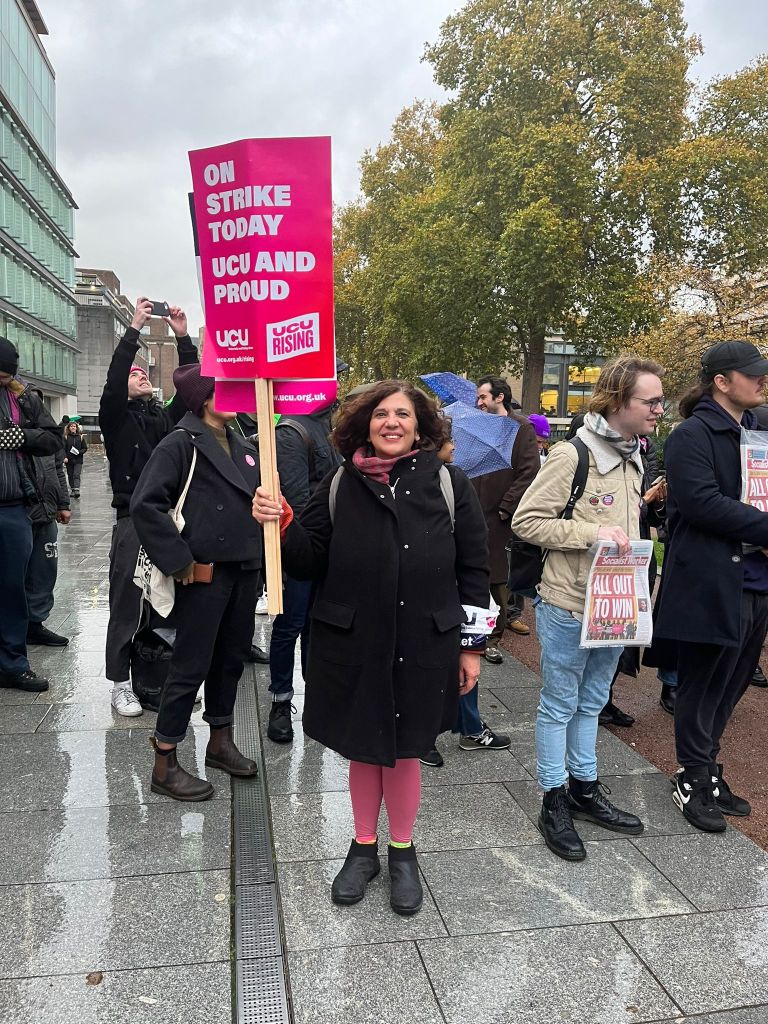
This is why it is tactically naïve and irresponsible to call off action that has put our negotiators in a strong position to win a significant deal, especially when the action is gaining momentum. Pausing action invites the employers to regroup so that they can go back on the offensive. This is precisely what happened when the RMT and CWU paused strikes for talks. The employers took this as a signal to impose more redundancies, smash existing agreements and make no movement over pay.

Those who have been involved in strike action over the last few years in FE will be all too familiar with ‘pausing disputes’ for talks, usually advised by UCU HQ or regional offices. Rarely has pausing disputes, when they have just started building momentum, gained any meaningful deals.

The second issue with pausing the strike in HE that is of concern for those  in FE is the blatant disregard for UCU’s democratic structures. It is extraordinary that the General Secretary agreed to call off the action without consulting the HEC first or better still to consult members. This ‘we know best’ approach to leadership is one that will only lead to frustration and anger amongst those who have struck, picketed, and marched to pursue their claims. If UCU is to be a ‘member led union’ not just in name but in practice, then it must always allow those who are making the sacrifice to determine their own futures.

In Further Education, as we begin our campaign to win a nationally aggregated ballot so that we can strike over, pay, workload and a national bargaining framework,  we must be alert to what is taking place in HE.

Unfortunately, as is mentioned above,  what took place on Friday is not something peculiar to UCU – it is something that is all too common within other unions.

Trade Union Leaders believe that their members do not have the determination and stamina to launch a fight that can win. This stems from their acceptance of the parameters of what is possible according to what the employers and government tell us is possible.

There has never been a better time to fight. The government is in crisis. The employers are deeply divided over Europe. They have no strategy on how to resolve the cost-of-living crisis accept to go into attack mode. But our side has shown within UCU, and across the trade union movement as a whole, that working people have the will, the organisation and determination to resist these attacks on a scale that we have not seen in a generation.

Our leaders need to match up to their sacrifice and commitment and not take it for granted.

Defend Further Education!

In its most recent meeting a couple of weeks ago, the FEC took an important decision to build for a nationally aggregated ballot. This decision will provide a clear strategy to fight for FE members pay and better conditions. The FEC called for members to be balloted to take strike action for an above inflation pay rise + 2%, binding national structures and a national workload agreement. There will be a consultative ballot first after which   a FESC will be held to debate the next steps. This is a very welcome and necessary step forward in fighting for a properly funded FE sector, with pay that values the work of FE members. #RespectFE!

FE colleagues have gained some important local victories, through individual branches fighting back and, over the past year, through the nationally coordinated Respect FE campaign. The reps and branch activists must be commended as they have worked tirelessly to get these wins, but now is the time to move to national action.

Firstly, as a union – we must provide strength in unity to all of our members. By building a nationally aggregated ballot we can provide support to branches that have struggled to get action locally. And those branches that haven’t won gains need the support of the union to keep fighting so they don’t feel like they are fighting alone. Secondly, there is a limit to which local branches can win by themselves. Out of the 33 branches that have been in dispute over pay, 13 are still unresolved. Poorer colleges will claim there is no money as they are severely underfunded. Even in wealthier colleges where senior management are on sky high salaries which could be cut to ensure teachers gain fairer pay – there is a limit without increased funding.

National action is necessary so the union can take aim at the employers as a whole and the government to demand increased funding to secure over inflation pay rises. FE colleges have recently been reclassified as public sector bodies; therefore, they should gain parity with teachers and we must demand that they have proper national pay bargaining that ensures more money for the sector.

It is right that this action is taken now. The situation in FE is dire, the sector has lost 25,000 jobs and wages have been cut by 30% over the last decade due to inflation and stagnating pay. Our FE members need the full weight of the union behind them in order to save this vital sector in our society. NEU colleagues, alongside tens of thousands of other workers, are striking for better pay, people can see that teachers need to be valued more. 

FE worked miracles in the pandemic to support young people to continue their learning and provide them with vital emotional and social support. But young people are still scarred physically and mentally, and need support. Adult students need places to go to refresh their skills and to enrol on courses that expand their education. Society needs colleges that can provide these opportunities and second chances. It shouldn’t be overlooked and woefully underfunded, with teachers left exhausted and unable to pay their bills.

At a time when we are seeing the largest fightback by workers to improve their pay for a generation, the FEC decision to join the national fight for better pay and funding is the right one. This is a strategy that can win.